
Erie Previous Residents Source Trail
For an Erie address, begin with a place record and work outward in time. The Erie County property path supplies an address, parcel and map context, while the Erie County Recorder of Deeds keeps the recorded instruments that can connect one transaction to another. Neither source by itself establishes who lived at the address in a particular year. Dated directories, newspapers, maps and archival work supply a separate household and place layer. Keep each result tied to its source and date, especially when the current street form differs from the historical wording.
| Erie source | Published time span | Access route | Useful address evidence |
|---|---|---|---|
| Erie County Property Tax Search | Current public place path | Public address, parcel and map routing | Parcel, situs/property context, transfer and map navigation |
| Erie County Recorder of Deeds | Web range not published | Office viewing/copies, staff search, or authorized INFOCON access | Recorded deeds and related instrument citations |
| FamilySearch Erie deed catalogue | Deed books, 1823–1886 | Catalogue finding aid; image access varies | Early deed-book and grantor/grantee index leads |
| ECPL Heritage Room | Directories from 1853; census film 1800–1930 | On-site, noncirculating local collections | Dated address, ward/district and household research leads |
| ECPL newspaper microfilm | 1820–2018 | Heritage Room reader/printers | Notices, obituaries and place chronology |
| Hagen home-history research | Service scope depends on the project | Appointment and institutional research service | Title, ownership years, property description and context |
A recent question normally starts with the Erie County address or parcel route. An older question may start with a known directory edition, map year or deed citation. ECPL confirms that its Erie directory holdings begin in 1853, but does not publish a complete annual run, so confirm a particular edition with the Heritage Room. No verified public reverse or criss-cross directory run was located. Do not treat a directory listing as proof that a person currently lives there.
Begin Erie Previous Residents With a Parcel
The Property Tax Search is the sensible first stop for a historic-address trail because it is designed for a place. Enter the house number, select a direction when it belongs to the street, and enter the street name without a suffix such as Street or Road. The page offers match modes, then routes to parcel, recent-transfer and map material. A parcel-number search requires exactly 14 numeric characters with no spaces. Preserve the returned form, parcel number, taxing context, date accessed and source URL in the research notes.
Erie County’s public base search does not display owner information. That information is behind qualified registration and payment. A parcel result is therefore useful for a location, not a present owner or resident claim. Keep Erie County’s administrative terms separate: the correction form distinguishes property description, owner and mailing address. A mailing address is not automatically the situs address, and neither one establishes present occupancy.
Note: Save the entered street form and the returned property form as separate dated facts before comparing them with older sources.
Trace Erie Previous Residents Through Deeds
Recorded land documents can establish a documented instrument trail, not an automatic resident list. The Recorder records deeds, mortgages, satisfactions, powers of attorney, leases, UCC filings and related instruments. It says recorded documents are indexed and scanned and may be viewed or copied by the public. The office, at 140 West Sixth Street, Room 121, is the custodian for a precise document question. INFOCON is a fee-based subscriber service, and its public landing page did not expose Erie-specific coverage dates or fields. When a needed online record is unavailable, use the office’s copy route or the published paid staff-search path.
- Use the Erie County property route to capture the parcel and legal-description clues associated with the address.
- Ask the Recorder for the recorded instrument citation that corresponds to the documented transaction or legal description.
- Record the grantor and grantee spellings, recording date, instrument type, book/page or document number, and image or copy source.
- Use the earlier party and the same legal description to seek the preceding instrument, keeping uncertain links visibly marked.
- For older material, use the FamilySearch catalogue as a finding aid and consult the Recorder, ECPL or Hagen for the next documented access route.
- Grantor / grantee
- A grantor transfers an interest named in an instrument; a grantee receives that interest.
- Chain of title
- A dated sequence of recorded instruments used to examine how an interest moved over time.
- Legal description
- The parcel’s recorded land description, often more stable than a historical street label when matching documents.
Erie Previous Residents Beyond INFOCON
Online availability is not the same as record availability. INFOCON is the Recorder-linked, subscriber-based gateway; the reviewed public landing page does not establish its Erie coverage start, cutoff or result layout. That makes a date-specific office question more reliable than guessing from a blank online search. The Recorder’s public/copy access statement, an in-person request, and Erie County’s $20 staff-search option are documented alternatives. State the document type, party spelling or legal-description phrase, approximate recording period, and whether a copy or index citation is needed.
A related limitation applies to estate research. Erie County’s Register of Wills says probate reaches 1823, while its CourtPro change took effect March 3, 2025 and post-transition filings and dockets are not in INFOCON. Send estate questions for that period to the Register of Wills and its current process. Adoption records are sealed. A missing INFOCON result does not show that a probate record does not exist.
Pair Erie Previous Residents With Dates
Past residents are better tested through a sequence of dated sources than by one isolated name. ECPL’s Heritage Room has Erie city directories beginning in 1853, newspaper microfilm from 1820 through 2018, and Erie County census microfilm from 1800 through 1930. The local collection is on-site and noncirculating at Blasco Memorial Library. A directory can preserve a period address or block context; census material can add ward or district context. Neither should be normalized into a present-address claim without a documented bridge.
- Choose the directory edition closest to the period being researched and copy its date, street wording and any direction or cross-street cue.
- Compare that wording with a dated census, map or newspaper reference, retaining ward or district details rather than forcing a modern address match.
- Use a Recorder citation or legal description to test a possible connection between the historical description and the parcel.
- Record an unresolved difference as a gap, then ask the Heritage Room or archive whether a relevant edition, map or finding aid is available.
The historical volumes themselves are described in greater depth in the Erie city directory collections. For an address chain focused on current Erie County place records, the street directory provides the separate street-by-street route.
Read Erie Past Records by Edition
The Library of Congress Erie Sanborn collection provides material for 1888, 1900, 1921 and 1950. These maps are valuable for a map-era street label, block form, building footprint or visible land-use context. They are not current property records and do not establish that a named person lived at the location. For every observation, note the edition, volume or sheet, street label, visible feature and source date before connecting it to a deed or directory.
Historic Erie references can rely on a street side or cross streets rather than a modern-form address. Hagen examples include descriptions tied to Myrtle, Eighth, Seventh and Sassafras, as well as a 1912 State Street block context. No comprehensive official City renumbering or street-name-change table was located. Preserve the original language and only link it to a current parcel after a deed legal description or documented map comparison supports the match.
Erie Previous Residents at Hagen
Hagen History Center offers a structured, institutional route when a property history needs more than an index citation. Its home-history service describes research levels that can cover title research, ownership years, year built, property description, purchase or sale information, and later family or neighborhood context. The Library and Archives is at 356 West Sixth Street and offers research appointments. This is a research service, not an automated report and not a source for declaring current residence.
Erie County GIS provides the County’s public map and GeoHub context used to orient a place before deeper source work.
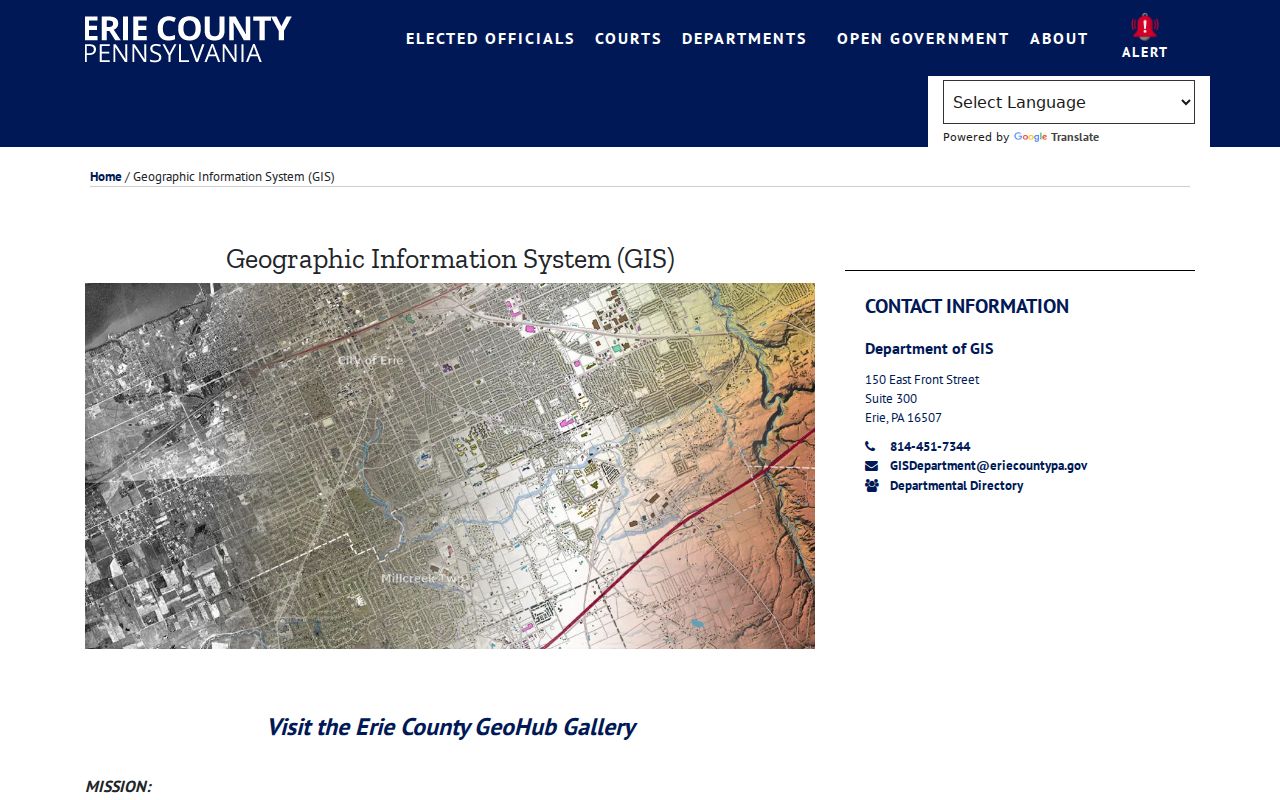
The GIS entry point is useful for geographic orientation and parcel-map handoff, not legal title or a current-residence conclusion. The reviewed landing page did not confirm a fixed viewer’s controls, layers or adjacent-parcel tools, so those details should be verified live before relying on them.
Note: Keep archival context separate from a Recorder citation until both sources are tied to the same dated place evidence.
Erie Previous Residents and Record Gaps
Erie’s record trail is shaped by its custodians and formats. Erie County history describes an early courthouse around West Perry Square, a destructive fire in 1823, later rebuilding, an 1852 Sixth Street office structure, and later additions. That history is a reason to ask about survival and format at each office or archive. It is not proof that any particular house record was lost. Early anchors include the Register of Wills’ stated probate reach to 1823 and the FamilySearch catalogue’s deed books beginning in 1823, but neither proves complete survival.
Use a source log when an address changes form: source name, date, search term, result type, access condition, citation and unresolved issue. That makes it clear why a directory line, a map label and a legal description may not yet resolve into one conclusion. The most reliable outcome can be a documented question for the Recorder, ECPL or Hagen rather than a forced answer.
Erie Past Households in Context
Use household-oriented material as period evidence. ECPL’s obituary index is a lead to a newspaper publication, not a vital certificate, and its date is the publication date rather than necessarily the death date. The Heritage Room’s newspapers, directories and census collections can help establish a chronology when each item is cited by edition, date and collection. Confirm an event through the appropriate custodian if that distinction matters.
For a death, marriage or estate question, Erie County separates the channels. The Erie County says its marriage records reach 1885 and its probate records reach 1823, while historical City and Erie County births and deaths have different stated repositories. An obituary or directory reference does not replace a custodial record. It can, however, give a precise date range or name spelling for a careful request.
Lawful use. Erie house-history and family-history research should stay source-specific and time-bounded. Pennsylvania law prohibits stalking and harassment; do not use archival or record material to monitor, threaten or target a living person.